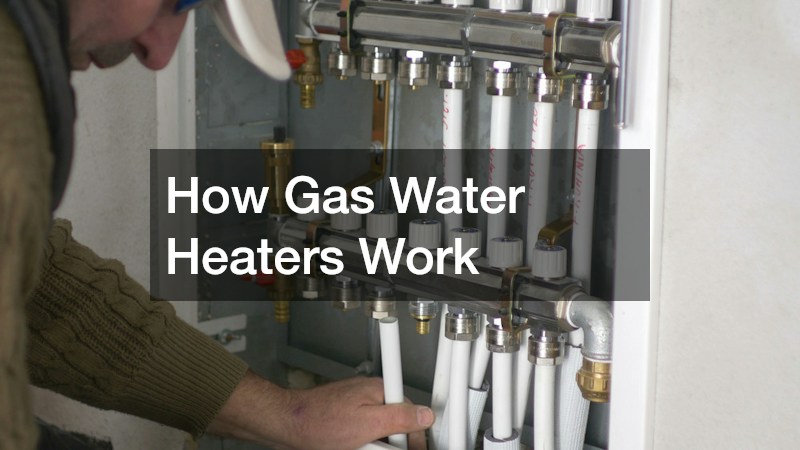
To understand how gas water heaters work, one must first appreciate their vital importance in the comfort, hygiene, and daily functionality of our homes. As we delve into the mechanical principles of these essential appliances, we also touch upon the integral role of regular heating service in maintaining their peak operational efficiency, safety compliance, and long-term longevity.
The Basics of Gas Water Heaters
A gas water heater typically consists of a heavy-duty storage tank that holds the water to be heated, a dip tube, a gas burner assembly, a thermostat, a pilot light or electronic igniter, and an exhaust vent. The main body is the steel tank itself, which varies in capacity, typically accommodating between 30 to 80 gallons of water depending on household demand.
Cold water enters the tank near the bottom through the dip tube, where it is then systematically heated.
The heating process begins at the thermostat control unit mounted on the side of the tank. Acting as the system’s central control hub, the thermostat continuously monitors internal water temperature and activates the gas burner when the temperature falls below the pre-set threshold (usually set to 120°F for optimal safety and energy efficiency). Once triggered, the gas burner releases a controlled flame beneath the tank bottom, initiating the thermal transfer cycle.
Regular heating service ensures that these critical mechanical components work harmoniously and optimally. From calibrating precise thermostat settings to cleaning ignition ports and clearing the gas burner assembly, routine professional maintenance prevents unexpected emergency breakdowns, reduces utility expenses, and significantly improves overall energy efficiency.
The Heating Process
The gas burner is situated directly within a combustion chamber at the base of the water heater tank. When ignited, it transfers intense heat upward through the tank’s metallic floor to the surrounding water via thermal conduction. As cold water warms, natural convection causes it to rise steadily to the top of the tank, where it sits ready to be drawn through the hot water outlet pipe whenever a home’s faucet, appliance, or shower demands hot water.
Efficient and uniform heat distribution is critical to the underlying performance of the gas water heater. Over months of operation, naturally occurring mineral sediment at the bottom of the tank can create an insulating barrier that hampers heat transfer, forcing the burner to run longer and making regular heating service essential. During these routine service visits, certified technicians typically flush out heavy sediment deposits, restoring proper heat transfer and safeguarding the tank floor from premature thermal stress.
Exhaust and Venting
Another integral and safety-critical component of gas water heaters is the dedicated venting system. Because the combustion of natural gas or propane creates gaseous by-products—including dangerous carbon monoxide, water vapor, and nitrogen dioxide—these exhaust fumes must be expelled safely outside the living envelope. The central flue stack and exhaust system channel these hot gases upward from the burner area to the exterior of the home, eliminating serious indoor air quality hazards.
A properly functioning venting system is essential not only for household safety but also for operational efficiency. Blocked, corroded, or improperly sloped vents can lead to toxic flue gas spillage, backdrafting, and reduced burn efficiency. Hence, professional heating service typically includes a rigorous inspection of the venting pipe, draft hood, and chimney connections to ensure there are no physical obstructions, leaks, or backdraft risks.
The Role of Insulation
To prevent constant heat loss through the steel walls of the storage vessel, modern gas water heaters are constructed with high-density polyurethane foam insulation sandwiched between the inner tank and the outer metal jacket. This insulating barrier keeps heat contained within the stored water for extended periods, drastically reducing standby heat loss and lowering energy consumption since fewer gas resources are needed to maintain baseline water temperatures.
Insulation effectiveness can diminish over time due to structural degradation, physical damage, or moisture accumulation. Regular heating service can help identify any weaknesses, exterior hot spots, or insulation breakdown, allowing homeowners to address thermal inefficiencies before they begin to significantly inflate monthly energy bills.
Maintenance and Longevity
Although gas water heaters are engineered to be durable and resilient under continuous water pressure, they still require consistent, structured maintenance to perform at their best. Internal components like the sacrificial anode rod—which intentionally corrodes to protect the inner lining of the steel tank from rusting—must be inspected and replaced every few years to avoid catastrophic tank failure.
Routine heating service not only extends the usable lifespan of the water heater well beyond its standard warranty period, but it also ensures the unit operates safely. Professional maintenance protocols typically involve testing the Temperature and Pressure (T&P) relief valve, checking gas supply lines for subtle leaks, inspecting burner flame color, testing safety shutoff valves, and resolving minor mechanical anomalies before they develop into expensive system failures.
Choosing the Right Heating Service Provider
When selecting a professional heating service provider, look for licensed, insured technicians with extensive experience in handling complex gas-fired appliances and plumbing connections. They should offer comprehensive care packages, including new installations, preventative maintenance routines, and 24/7 emergency repair services. Partnering with a reliable heating service provider brings invaluable peace of mind, knowing that your home’s water heating infrastructure remains safe, compliant, and dependable.
While gas water heaters are sophisticated appliances, their core operation hinges on several straightforward thermodynamic and mechanical principles. From the precise responsiveness of the thermostat and burner assembly to the crucial functions of proper flue venting and thermal insulation, each element works in concert to deliver a reliable supply of hot water. Regular heating service is indispensable to this balance, ensuring every component operates safely, efficiently, and cost-effectively for years to come.